In the automotive drivetrain industry, the Constant Velocity (CV) joint boot (commonly known as the CV axle boot or ball cage dust cover) plays a small but critically decisive role. Sitting at the pivot points of the front-wheel drive (FWD), all-wheel drive (AWD), and rear-wheel drive (RWD) drive shafts, these corrugated flexible covers protect the precision cv joints of premium brands—such as BMW, Mercedes-Benz, Audi, Volkswagen, Hyundai, and Toyota—from premature wear and cataclysmic failure.
1. Primary Classification: Understanding the Materials
Historically, CV joint boots were manufactured exclusively from flexible elastomers. However, modern polymer engineering has expanded the catalog into high-performance thermoplastic copolyesters. To help purchasing managers and automotive distributors optimize their procurement strategies, we compare the physical properties of the three main commercial materials below:
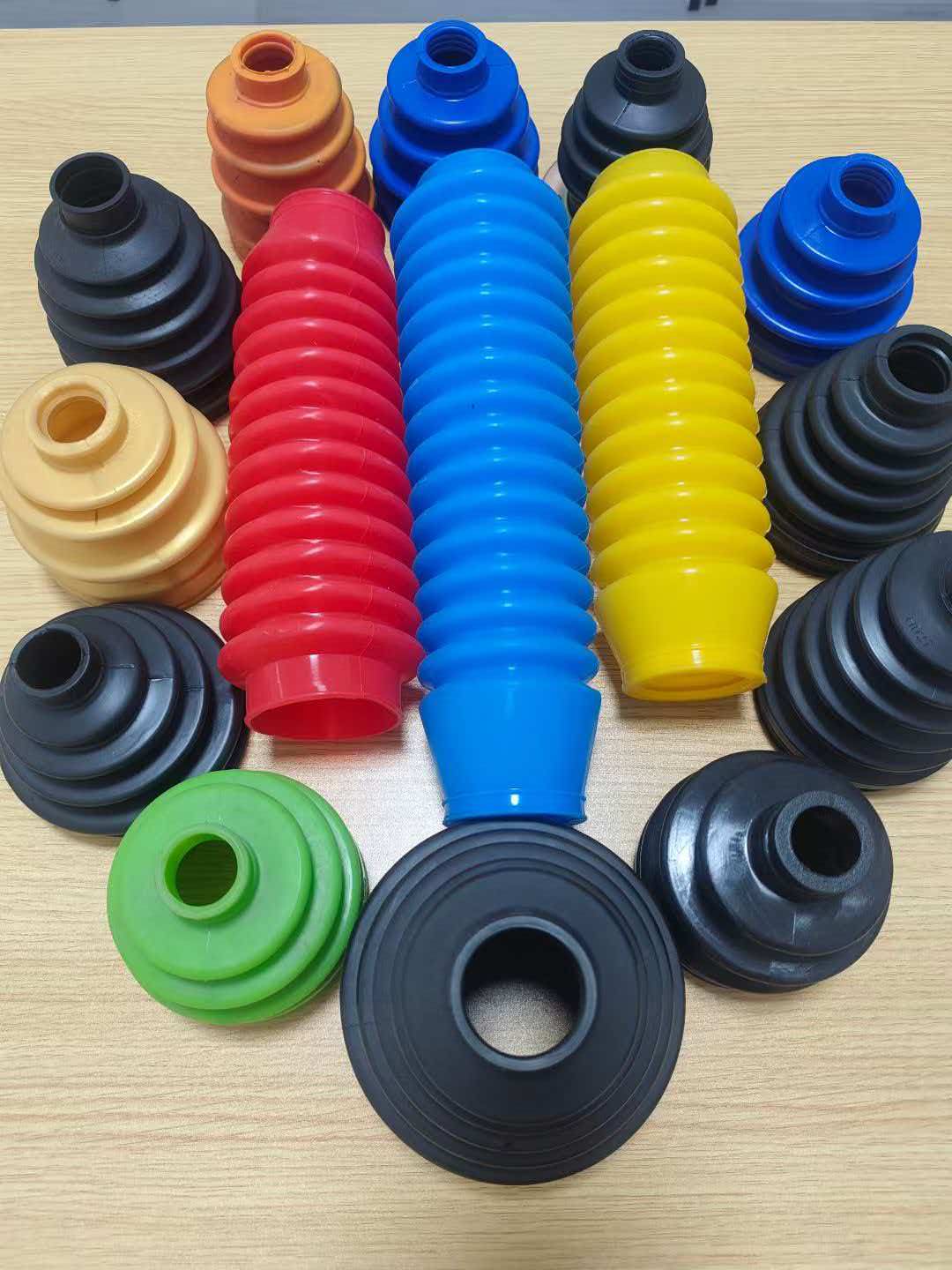
1.1 Natural Rubber (NR) – The Cost-Efficient Classic
Natural Rubber compounds boast exceptional natural elasticity, high tear resistance, and outstanding flexibility at cold temperatures (down to -40°C). Because of its lower compound raw material costs, natural rubber CV joint boots are highly cost-efficient and occupy the largest market share in the automotive aftermarket (IAM) today. For vehicle models operating in moderate environments, NR remains a reliable, field-tested choice.
1.2 EPDM Rubber – The Weather-Resistant Workhorse
Ethylene Propylene Diene Monomer (EPDM) is synthetic rubber renowned for its unmatched resistance to ozone, heat, UV degradation, and weathering. It is particularly suited for steering and axle boots exposed to high solar UV exposure and environmental weathering, retaining its elasticity without cracking far longer than natural rubber.
1.3 Blow-Molded Thermoplastic Polyester Elastomer (TPEE) – The OEM Gold Standard
Thermoplastic Elastomer Ether-ester (TPEE) represents the peak of modern drivetrain sealing. It is a copolymer combining the processing advantages of thermoplastics with the flexibility and structural recovery of thermoset elastomers. Manufactured via high-precision blow molding, TPEE CV joint boots are extremely rigid, lightweight, and exhibit outstanding resistance to abrasion, puncture, grease, and chemicals. Currently, modern premium vehicles (Mercedes, BMW, Audi, and Toyota) adopt TPEE CV boots as original factory equipment (OE) by default.
2. Technical Performance Comparison: TPEE vs. Rubber
For B2B wholesalers and buyers, balancing service life with unit price is the key to strategic sourcing. Here is an engineering comparison matrix:
| Engineering Criteria | Blow-Molded TPEE | Natural Rubber (NR) / EPDM |
|---|---|---|
| Service Life | Ultra-long (Exceeds 150,000 km) | Standard (50,000 to 80,000 km) |
| Grease & Chemical Resistance | Excellent (Immune to mineral & synthetic grease) | Moderate (Vulnerable to long-term grease degradation) |
| Tensile & Tear Strength | High (Resists sharp gravel punctures) | Moderate (Prone to tearing if nicked by road debris) |
| Temperature Thresholds | Wide range (-50°C to +150°C) | Standard range (-40°C to +100°C) |
| Production Process | High-precision Blow Molding | Traditional Compression Molding |
| Economic Advantage | OEM standard, higher initial cost | Highly budget-friendly, mass market appeal |
3. Usage Environments & Engineering Role
To appreciate why CV joint boots require precise compounding, it is essential to analyze their punishing operational environments:
3.1 Retaining Lubricant under Extreme Centrifugal Force
The interior of a CV joint is packed with highly viscous molybdenum disulfide grease, which reduces friction between the steel balls and the joint housing. When the drive shaft rotates at high speeds (often exceeding 2,000 RPM), extreme centrifugal forces push this grease outward. The CV boot seals this grease inside, preventing dry friction, overheating, and metal-on-metal lockups.
3.2 Protecting Against Road Debris, Water, and Mud
Sitting directly behind the wheels, CV boots are constantly pelted by sharp road gravel, mud, rainwater, and winter road de-icing salts. A single tear in the boot allows water to wash away the grease, and sand/grit to enter the joint. This creates an abrasive paste that destroys the CV joint in as little as 100 miles of driving.
3.3 Adapting to Dynamic Angular Movements
As the vehicle steering rack turns and the suspension travels over bumps, the CV joint is forced to pivot up to 45 degrees. The CV boot must expand and compress millions of times without fatigue-cracking. This dynamic flexibility requirement is why TPEE’s superior fatigue resistance is preferred for modern high-angle drivetrain layouts.
4. Market Dynamics and Sourcing Advice
In the global automotive market:
- The OEM Market: Driven by requirements for zero-warranty claims and longer service intervals, new passenger vehicles (BMWs, Audis, Mercedes, and modern Toyotas) use TPEE boots by default due to their supreme durability.
- The Aftermarket (IAM): Because of the vast volume of older vehicles and repair shops prioritizing repair budget constraints, rubber CV boots remain the absolute volume king. Their low unit cost makes them ideal for mass-market replacement parts distribution.
As an ISO 9001:2015 certified manufacturer, CALEPH Mechanical Parts manufactures both premium blow-molded TPEE CV boots and heavy-duty, high-elastomer rubber boots for a comprehensive variety of European, Asian, and American passenger cars. Our products are engineered to meet strict dimensional tolerances and withstand harsh environmental conditions, providing your brand with zero-leakage, high-reliability sealing solutions.
For custom CAD engineering drawings, material compound datasheets, or to receive a professional B2B wholesale quotation, contact our sales engineering office at alex@caleparts.com today.